
Cable assembly services
Cable assemblies designed around one job.
Pecko designs and builds special purpose cable assemblies for applications that standard cables do not fit: unusual lengths, mixed conductors, uncommon connectors or tight installation paths. Our engineers help shape the design, then we build and test it to your drawing.
- Since 1981Manufacturing experience, founded in Singapore
- 25,000+Projects completed
- 20Industries served
- 3Factories in Singapore, Malaysia and China
Overview
What is a special purpose assembly?
A special purpose cable assembly is designed around the needs of a single application rather than chosen from a catalog. The cable, connectors, length, shielding and protection are each selected for how the assembly will be installed and used, whether that means combining power and signal in one jacket, fitting an unusual connector pair, or surviving constant flexing inside a machine.
- Designed around a single application
- Power, signal and data in one cable
- Non-standard lengths, breakouts and connectors
- Engineering review before anything is built
Features
Features of special purpose assemblies
A special purpose assembly earns its place by solving a problem an off-the-shelf cable cannot. These are the qualities we design and build in.
-
Application-first design
Each assembly starts from how it will be installed, flexed, mated and serviced, and the component choices follow from those conditions.
-
Mixed conductors
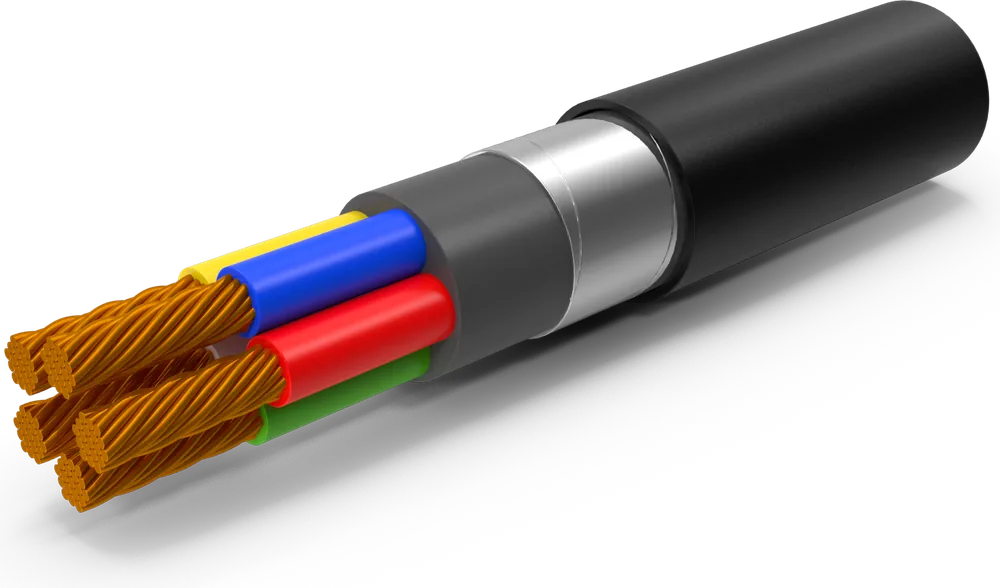
Power, signal and data conductors can share one jacket, cutting the number of separate cables routed through a machine or enclosure.
-
Exact lengths and breakouts
Overall length, breakout points and leg lengths are set to your installation, so the assembly fits its route without coiled slack or tension.
-
Uncommon connector pairings
Different connector families at each end, adapters between legacy and current equipment, or a connector named by your customer, all wired to your pinout.
Capabilities
How we build special purpose assemblies
From a first sketch to production volumes, our engineers work through the design with you and our factories build it to the agreed drawing.
Design review
Engineers review your drawing or requirements, flag risks such as tight bend radii or undersized conductors, and suggest practical alternatives.
Component selection and sourcing
Cable, jacket and connectors chosen for flexing, temperature and current, then sourced from global or domestic suppliers.
Drawings and documentation
When you start from a sample or a sketch, we prepare a formal drawing for your approval before production begins.
Prototype to production
Small prototype runs prove fit and function in your equipment, then the same drawing carries into volume production.
Strain relief and protection
Molded strain reliefs, heat-shrink boots and sleeving protect the points where the cable meets the connector and flexes most.
Testing to your plan
Continuity, pinout and any functional checks you require, run to the test plan agreed in your quote.
Why Pecko
Why OEMs choose Pecko
A manufacturing partner should make your program simpler. These are the reasons customers bring their assemblies to Pecko, and keep them here.
-
Expertise and experience
Wire harness and cable assembly work since 1981, across 20 industries and 25,000+ projects.
-
Quick turnarounds
Clear quotes, confirmed schedules and regular updates, from the first prototype to every production release.
-
High flexibility
Engineering changes, revisions and schedule shifts handled without starting your program over.
-
Cost-effectiveness
Design-for-manufacture advice, global sourcing and efficient processes keep your unit cost down.
-
Small and large volumes
From a handful of prototypes to high-volume production, with capacity across three factories.
-
Caring customer service
A team that answers technical questions quickly and follows your program from quote to delivery.
Applications
Where special purpose assemblies are used
Special purpose assemblies show up wherever a standard cable would need to be forced, spliced or adapted to fit.
Test and measurement
Instrument leads and fixture cables that connect test equipment to the specific product under test.
Robotics and motion
Cables that carry power and feedback through moving joints, rotating axes and cable carriers.
Medical equipment
Internal and accessory cables for monitoring, imaging and diagnostic equipment, built to the device maker's drawing.
Industrial machinery
Links between controllers, drives and sensors where standard lengths or pinouts do not fit the machine.
Audio and broadcast
Multi-pair snakes and breakout cables configured for a particular studio, stage or installation.
Legacy equipment
Adapter cables that connect older machines to new controllers without rewiring either side.
Quality
Quality built into every connection
Quality is designed into the process rather than inspected in at the end. Every program follows the same four steps, in an ISO-certified manufacturing environment.
Agree the specification
We review your drawing, materials and acceptance criteria with you before anything is built.
Prove the first article
A prototype or first article confirms fit, form and function before production starts.
Build to documented processes
Production follows documented work instructions at every step, from cutting to final assembly.
Test before it ships
Every order is tested against the plan agreed in your quote before it leaves the factory.
FAQ
Questions buyers ask
Can't find your answer? Send us your drawing and questions, and our engineers will come back to you.
What information do you need to design a special purpose assembly?
Start with what you know: the equipment at each end, the route the cable takes, the environment and any electrical requirements. A sketch, a sample or a drawing all work. Our engineers turn that into a formal drawing, and you approve it before anything is built.
Can you combine power and signal in one cable assembly?
Yes, where the application allows it. Composite cables carry power conductors alongside shielded signal or data pairs in one jacket. We review the voltages, currents and noise sensitivity involved, because some signals need their own shielded cable to stay clean.
Can you build special purpose assemblies in small quantities?
Many special purpose projects start with a handful of prototypes used to confirm fit and function in the real equipment. Once you approve the drawing, the same design moves into production at the volumes your program calls for, so the parts you receive match the samples you tested.
How do you test a special purpose cable assembly?
Testing follows the plan agreed in your quote, written around what the assembly has to do. Continuity and pinout checks are the baseline. Depending on the design, the plan may add insulation resistance, shield continuity, pull-force sampling on crimps or a functional check in a fixture.